
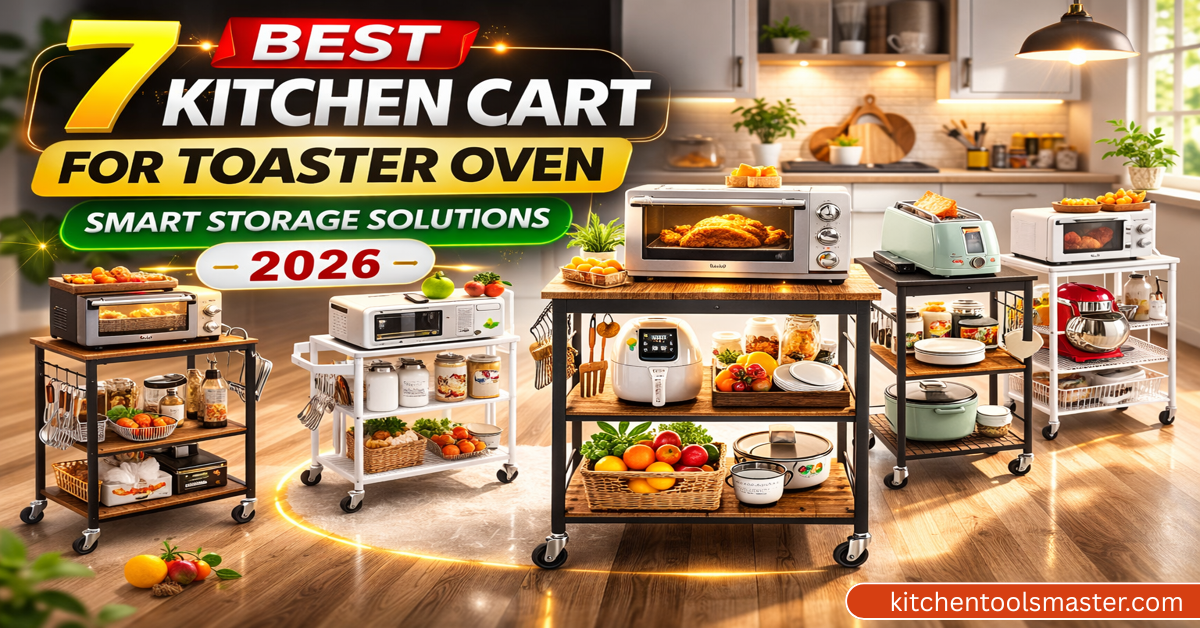
Kitchen Cart for Toaster Oven That Looks Expensive
Kitchen cart for toaster oven usually becomes a real need after you’ve lived with a toaster oven on the counter long enough to realize how much space it quietly takes over. Not just the footprint — but the heat zone around it, the cord placement, the crumbs, and the way it slowly becomes a permanent obstacle in prep space.
In real kitchens — especially small or medium kitchens used daily — toaster ovens often move from “secondary appliance” to daily cooking tool. Once that happens, counter placement starts creating friction. This category isn’t about decorative storage. It matters once you use a toaster oven often enough that its location starts affecting how you cook, prep, and clean.
Why Kitchen Cart for Toaster Oven Matters in Real Kitchens
In real kitchens, toaster ovens are used in bursts — reheating, small baking, quick roasting, air-fry style cooking, or meal prep support. Because they generate heat and need airflow, they don’t always work well squeezed between cabinets or appliances.
A kitchen cart changes how toaster ovens fit into workflow. From experience, the biggest benefit isn’t storage — it’s separation. The oven gets its own safe heat zone while freeing prep space. Over months of use, kitchens feel less crowded because heat, crumbs, and accessory clutter move off primary prep counters.
Why Counter Placement for Toaster Ovens Often Becomes Frustrating Over Time
Most people start with toaster ovens on counters because it’s simple. What they don’t notice is how quickly toaster ovens become permanent counter residents. Over time, that reduces prep space more than expected.
Heat zones also matter. Many toaster ovens radiate heat outward. Over time, nearby items get moved, cords get repositioned, and that section of counter becomes semi-usable. Many users eventually realize toaster ovens behave better when given their own dedicated station.
Kitchen Cart for Toaster Oven
ThreeHio 3-Tier Rolling Kitchen Cart for Toaster Oven and Small Appliance Storage
The ThreeHio Rolling Kitchen Microwave Cart (3-Tier Stand) is designed for a practical kitchen cart for toaster oven setup where counter space and organization are limited. Its compact footprint makes it suitable for small kitchens, apartments, or multi-use spaces, helping keep appliances like toaster ovens, microwaves, or coffee machines off the main countertop.
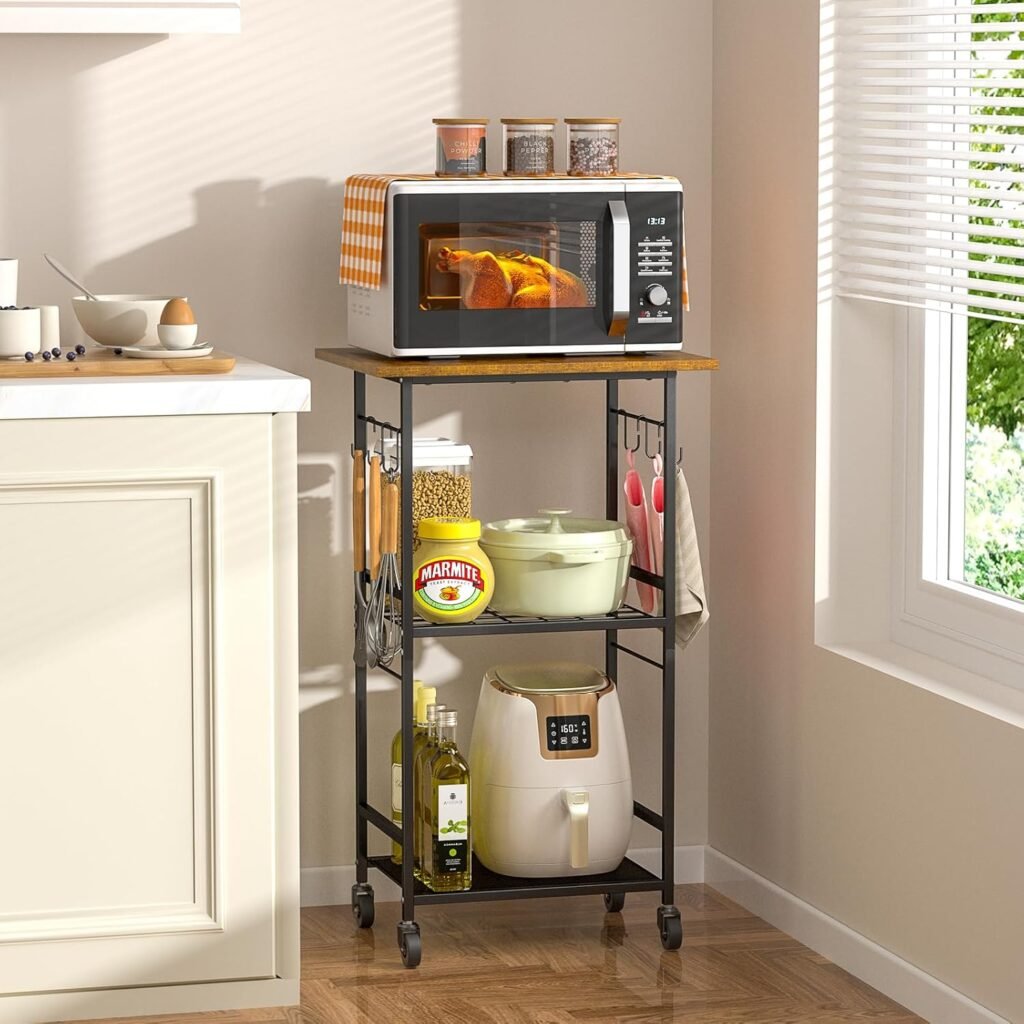
From a real kitchen workflow perspective, the adjustable middle shelf adds flexibility depending on appliance height, allowing you to position a toaster oven comfortably while still using the lower tiers for storage. The three-tier design helps separate appliances, ingredients, and tools, while the included S-hooks provide quick access to frequently used utensils. This kind of layout improves prep efficiency by keeping everything within reach.
In everyday use, the combination of a metal frame and wood shelves offers stable support for small appliances while remaining easy to clean. The 360° rotating wheels make it easy to move the cart when needed, and the lockable casters keep it steady during use. With its multi-purpose design and space-efficient structure, it fits well into kitchens focused on mobility, organized storage, and flexible appliance placement.
HapiRm 4-Tier Rolling Kitchen Cart for Toaster Oven with Pull-Out Storage
The HapiRm Rolling Kitchen Microwave Cart (4-Tier Stand) is designed for an organized kitchen cart for toaster oven setup where both storage capacity and accessibility matter. Its wider tabletop provides enough space for appliances like a toaster oven or air fryer, while the vertical tiered design helps free up valuable counter space in small kitchens.
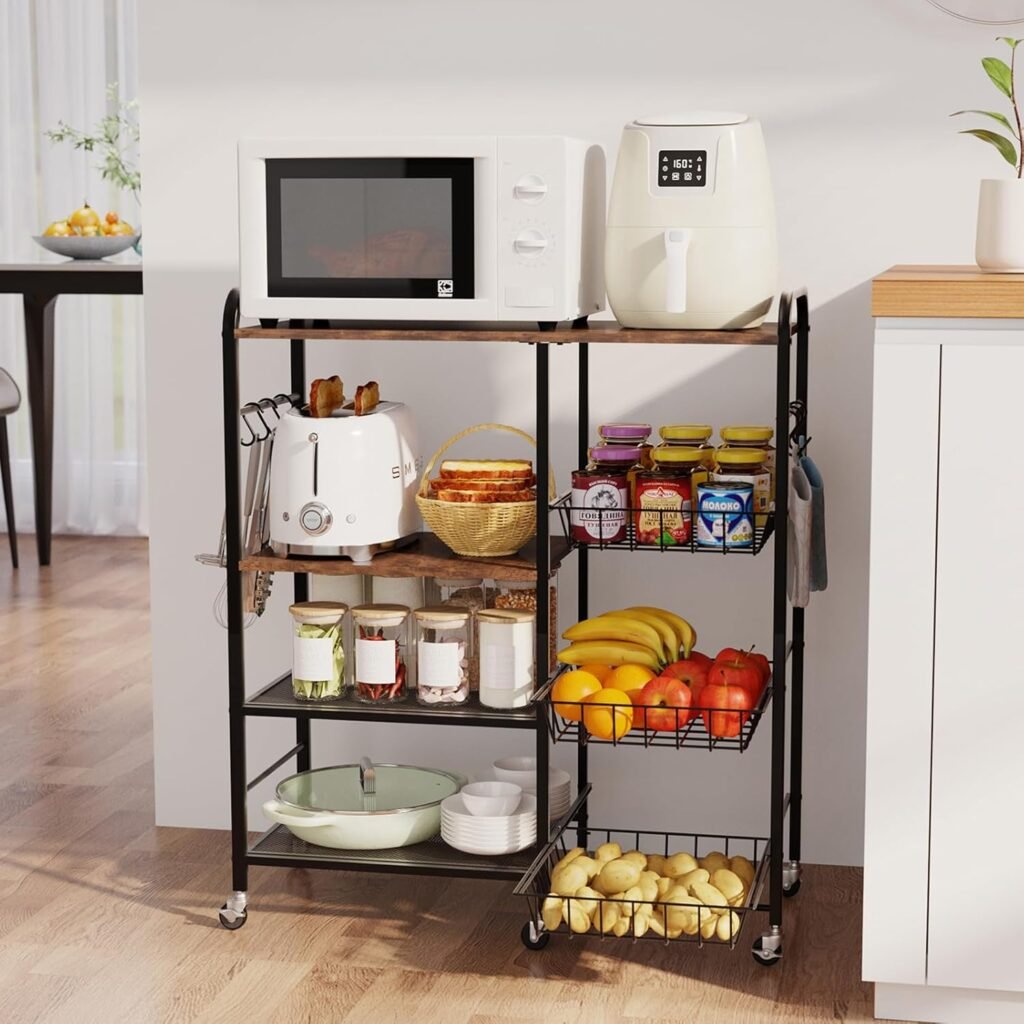
From a real kitchen workflow perspective, the combination of open shelves and pull-out baskets improves how items are stored and accessed. The top surface supports heavier appliances, while the lower tiers and sliding baskets help organize spices, snacks, or cooking essentials without overcrowding. This kind of layout reduces clutter and keeps frequently used items within reach during daily cooking routines.
In everyday use, the metal and wood construction offers stable support for appliances, while the pull-out baskets make it easier to access items stored deeper inside. The included S-hooks add extra hanging space for utensils, improving vertical storage efficiency. With smooth-rolling wheels and lockable casters, it can be moved or fixed in place as needed, making it suitable for kitchens focused on flexibility, organized storage, and efficient use of space.
VASAGLE 3-Tier Kitchen Cart on Wheels for Toaster Oven and Compact Storage
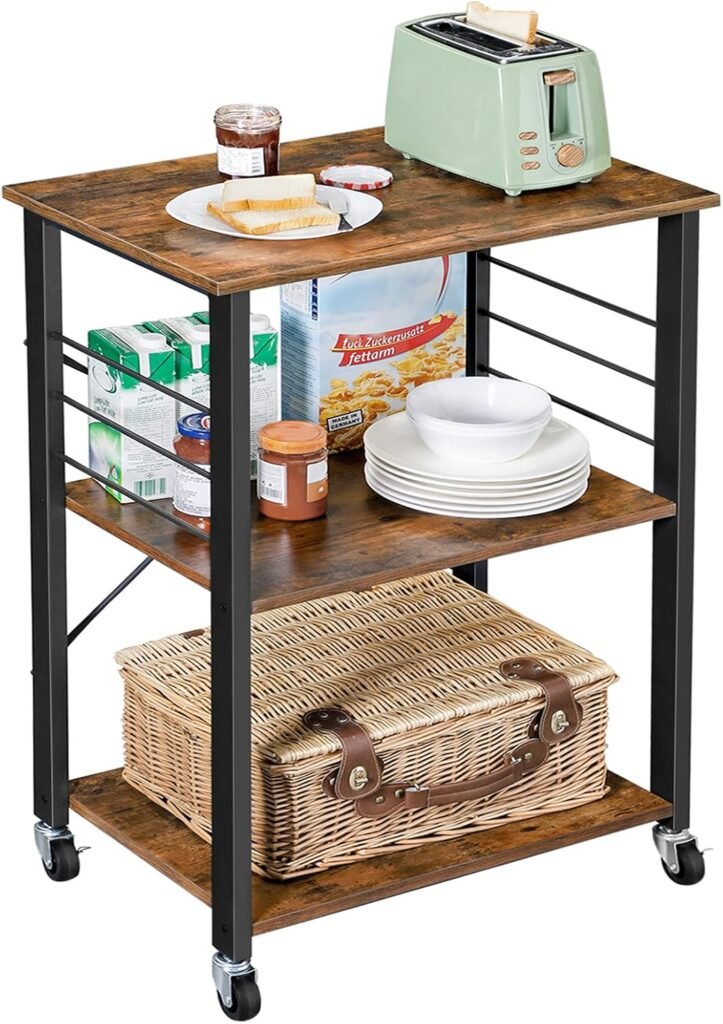
The VASAGLE Kitchen Shelf on Wheels (3-Tier Serving Cart) is designed for a practical kitchen cart for toaster oven setup where compact storage and mobility are important. Its 23.6-inch width fits well in small kitchens, helping create a dedicated space for appliances like toaster ovens or mini ovens without taking up main countertop area.
From a real kitchen workflow perspective, the three-tier layout allows you to separate appliances, ingredients, and utensils efficiently. The top shelf provides stable space for a toaster oven, while the lower shelves can hold cookware, pantry items, or small appliances. The 6 removable hooks add vertical storage for frequently used tools, which helps reduce clutter and keeps essentials within easy reach during daily cooking.
In everyday use, the combination of engineered wood and a steel frame provides stable support, while the X-shaped back reinforcement adds durability over time. The rolling casters make it easy to move the cart between kitchen zones, and the lockable wheels keep it secure during use. With its compact footprint and multi-use design, it fits well into kitchens focused on space efficiency, organized storage, and flexible appliance placement.
SWTYMIKI 3-Tier Rolling Kitchen Cart for Toaster Oven with Storage Baskets
The SWTYMIKI Rolling Kitchen Microwave Cart (3-Tier Stand) is designed for a functional kitchen cart for toaster oven setup where both storage and mobility improve daily kitchen workflow. Its compact footprint fits well in small kitchens while creating a dedicated surface for appliances like toaster ovens, helping free up main counter space.
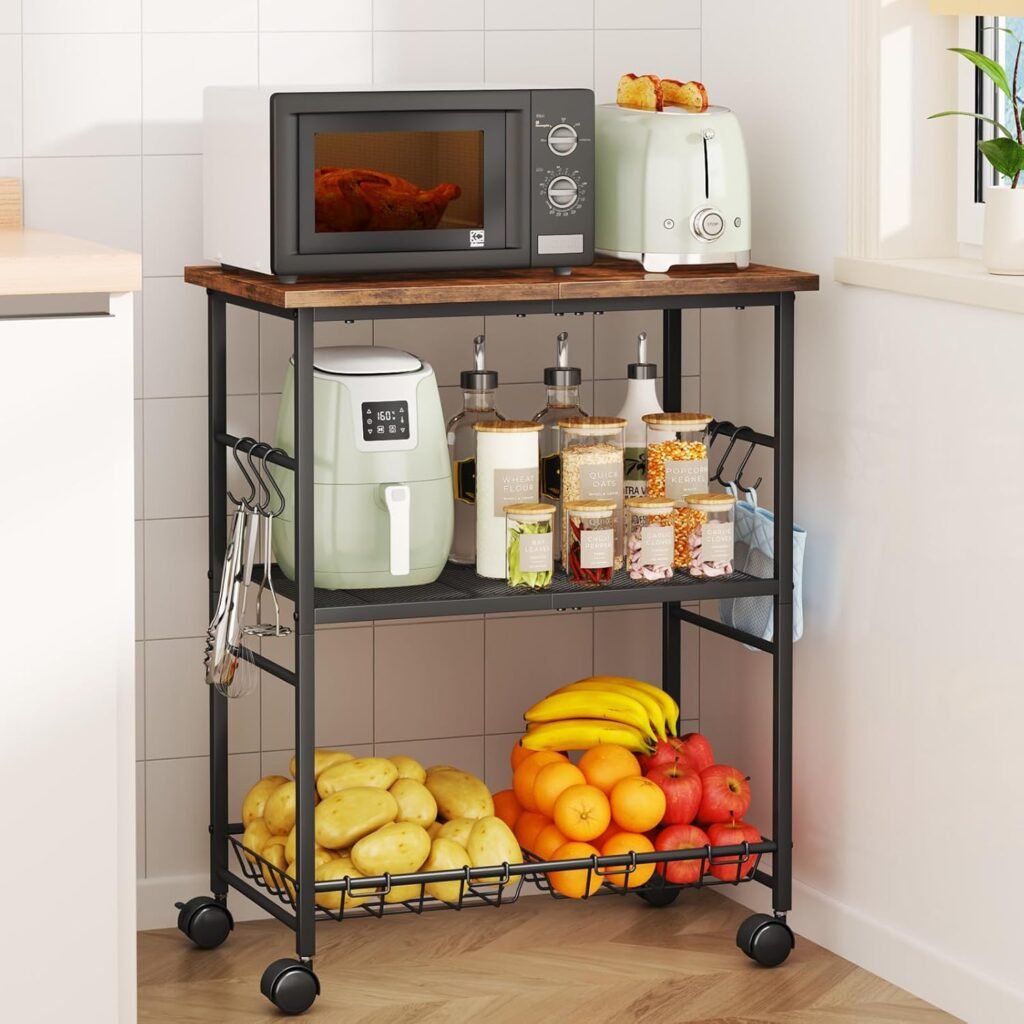
From a real kitchen workflow perspective, the three open shelves provide clear separation between appliances, ingredients, and tools. The top surface supports a toaster oven or microwave, while the lower tiers and double-row baskets make it easier to organize produce, spices, or utensils without clutter. This layout improves accessibility during cooking by keeping frequently used items within reach.
In everyday use, the metal and wood construction offers stable support for small appliances, while the removable baskets make cleaning and reorganization more convenient. The 360° rolling wheels allow easy movement across different kitchen zones, and the lockable casters keep the cart steady when in use. With added S-hooks for hanging tools, it fits well into kitchens focused on efficient storage, flexible placement, and organized appliance setup.
Pkuyres 3-Tier Rolling Kitchen Cart with Push Handle for Toaster Oven Setup
The Pkuyres Microwave Kitchen Cart with Push Handle (3-Tier Rolling Cart) is designed for a practical kitchen cart for toaster oven setup where both mobility and organized storage are important. Its compact size fits well in small kitchens or tight corners, helping create a dedicated station for appliances without overcrowding the main countertop.
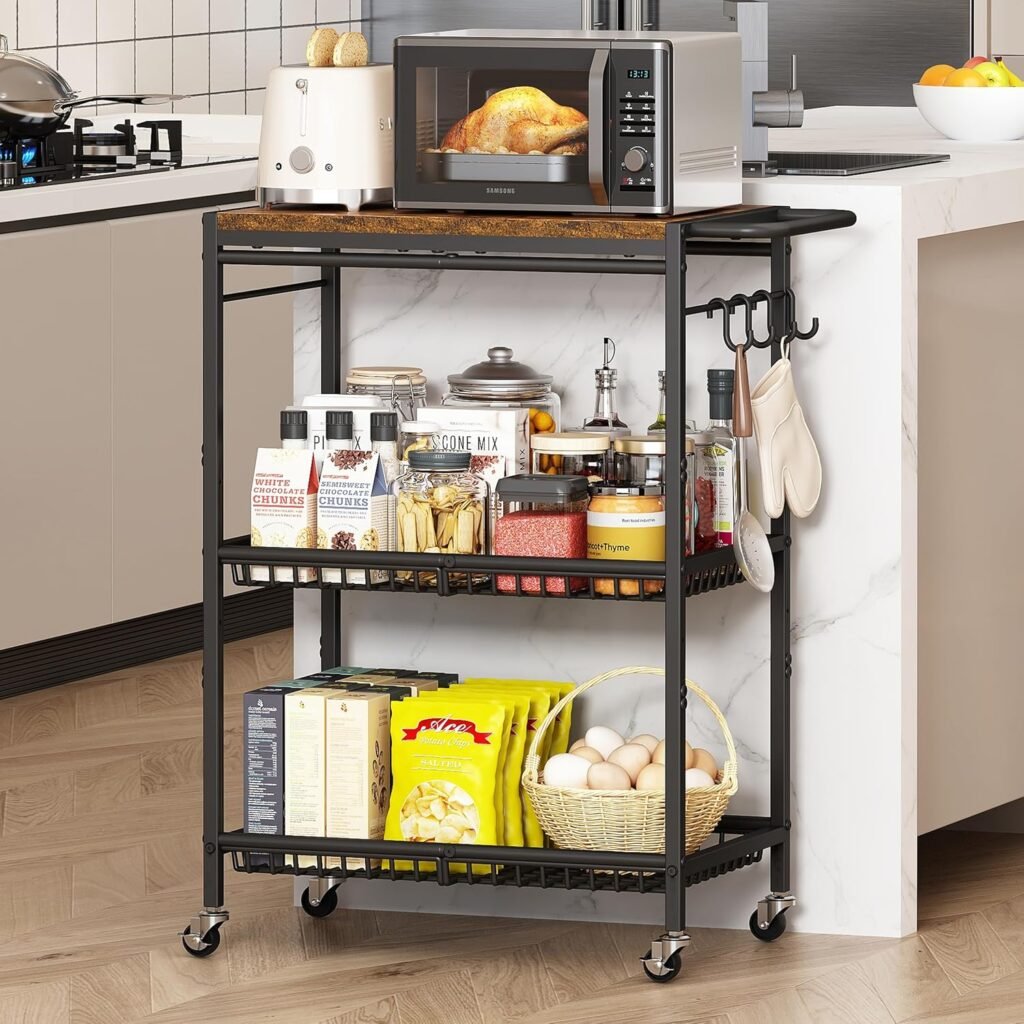
From a real kitchen workflow perspective, the three-tier layout allows you to separate appliances, ingredients, and tools efficiently. The top surface supports a toaster oven or microwave, while the adjustable middle shelf helps accommodate different appliance heights. The lower mesh shelves provide additional space for cookware, pantry items, or small appliances, improving overall kitchen organization and accessibility.
In everyday use, the sturdy wood and metal construction supports heavier appliances with stable weight distribution, while the push handle and smooth-rolling wheels make it easier to move the cart between kitchen zones. Lockable casters keep it steady during use, and the open shelf design makes cleaning and maintenance straightforward. Overall, it fits well into kitchens focused on flexible placement, organized storage, and efficient use of limited space.
OGEMXU 4-Tier Rolling Kitchen Cart for Toaster Oven with Multi-Level Storage
The OGEMXU Kitchen Microwave Cart with Wheels (4-Tier Baker’s Rack) is designed for a flexible kitchen cart for toaster oven setup where vertical storage and mobility improve everyday workflow. Its compact size fits well in small kitchens while creating a dedicated station for appliances like toaster ovens, coffee makers, or microwaves without taking over counter space.
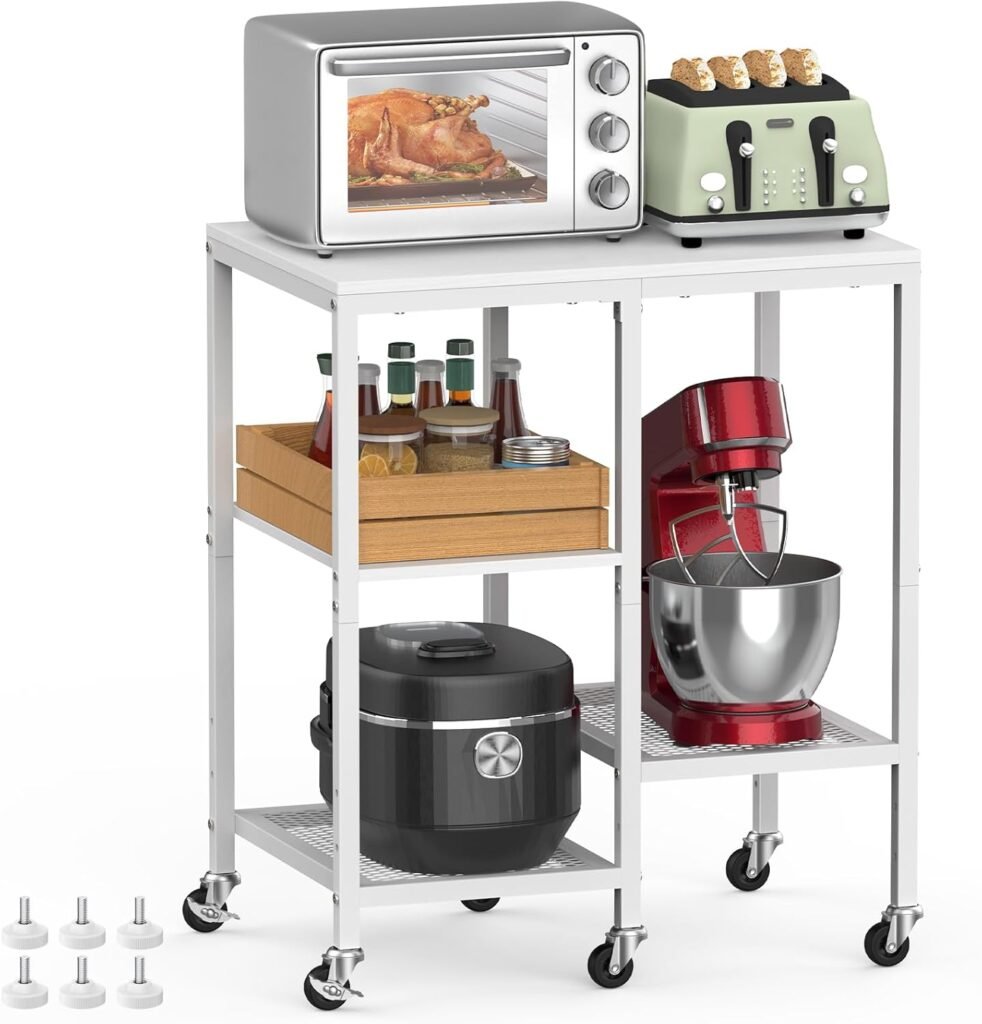
From a real kitchen workflow perspective, the 4-tier design allows better separation of appliances, ingredients, and tools. The top wooden surface provides a stable area for a toaster oven, while the adjustable metal mesh shelves below help accommodate items of different heights, from cookware to pantry essentials. This layered storage setup helps keep frequently used items within reach and reduces clutter during meal prep.
In everyday use, the sturdy metal frame and wood panels provide reliable support for small appliances, while the smooth-rolling wheels make it easy to reposition the cart as needed. Lockable casters and adjustable feet add stability on uneven surfaces, which is useful in compact kitchen layouts. With its multi-use design and organized structure, it fits well into kitchens focused on space efficiency, flexible storage, and convenient appliance placement.
Logicexplore Foldable 3-Tier Kitchen Cart with Solid Oak Top for Toaster Oven Setup
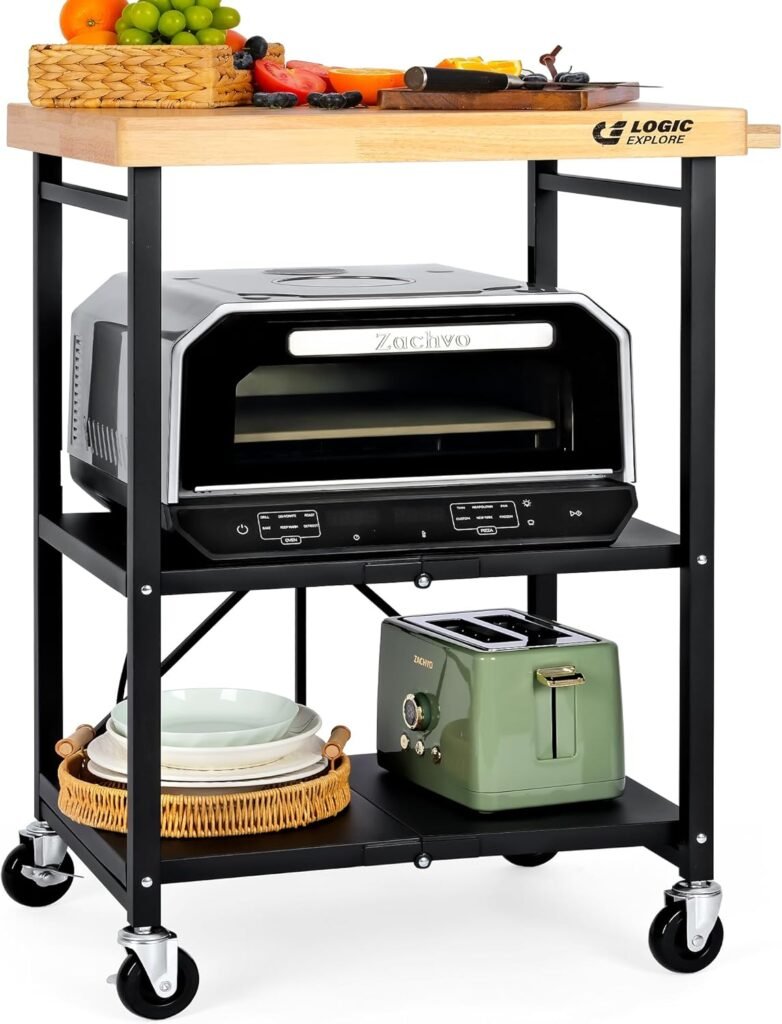
The Logicexplore Foldable Kitchen Storage Cart with Solid Oak Top is designed for a flexible kitchen cart for toaster oven setup where space-saving and multi-use functionality are essential. Its foldable structure makes it especially useful in small kitchens or apartments, allowing you to expand your workspace when needed and store it away when not in use.
From a real kitchen workflow perspective, the solid oak top provides a stable surface for placing a toaster oven or handling light food prep tasks. The three-tier layout helps separate appliances, cookware, and pantry items efficiently, with the middle tier suited for small appliances and the lower tier for storage. This kind of organization improves accessibility and keeps frequently used items within reach during cooking.
In everyday use, the heavy-duty metal frame offers reliable support, while the smooth-rolling wheels make it easy to reposition the cart across different kitchen zones. Lockable casters keep it stable during use, and the foldable design adds long-term convenience for compact living spaces. Overall, it fits well into kitchens focused on flexible storage, efficient space use, and adaptable appliance placement.
What Makes Kitchen Cart for Toaster Oven Work Long-Term
From long-term use, carts that last tend to balance stability, ventilation space, and accessory storage. The cart should not wobble when opening oven doors or sliding trays. Shelf spacing should allow airflow above and around the oven.
Maintenance matters too. Crumb buildup and heat exposure happen over time. Carts with wipe-clean surfaces and simple shelf layouts tend to stay usable longer. Over time, the best carts stop feeling like “extra furniture” and start feeling like part of the appliance system.
Popular Kitchen Cart Types for Toaster Oven Use
Some carts focus on appliance-only placement. Others combine appliance placement with storage drawers or baskets. Some emphasize mobility. Others prioritize fixed stability.
Real kitchens usually succeed by matching cart style to cooking behavior. The goal isn’t maximum storage — it’s stable appliance placement with practical accessory organization.
Buyer-Focused Comparisons
Kitchen Cart vs Dedicated Appliance Shelf
Carts offer flexibility and mobility. Fixed shelves offer permanence and stability. Long-term satisfaction depends on whether kitchen layout changes frequently.
Rolling Cart vs Fixed Cart
Rolling carts improve cleaning access and repositioning flexibility. Fixed carts improve stability for heavier toaster ovens. Most long-term users prefer lockable wheels.
Open Shelf Cart vs Drawer Storage Cart
Open shelves improve airflow and heat safety. Drawer carts improve accessory organization. Many users prefer mixed designs.
How Toaster Oven Carts Fit Into Larger Appliance Planning
Many kitchens that use toaster oven carts also explore newer cooking tools from viral kitchen gadgets, especially when testing new cooking methods that don’t justify full appliance replacement.
They also work alongside larger appliance systems. Many households using high-capacity cooking systems — like those discussed in kitchen appliance packages with double oven — still rely on toaster ovens for quick daily cooking tasks because heating large ovens for small meals becomes inefficient.
Is Kitchen Cart for Toaster Oven Practical for Everyday Use?
Toaster oven carts are most practical for kitchens where toaster ovens are used several times per week. Occasional toaster oven users may not notice major workflow benefits. Long-term success depends on matching cart height and placement to cooking comfort.
Long-Term Benefits Observed
Over time, these are the benefits people stop noticing — but miss when they’re gone:
- More usable counter prep space
- Safer heat separation from main cooking zones
- Easier toaster oven cleaning access
- Less appliance clutter around prep areas
- More flexible kitchen workflow
Things to Keep in Mind
Cart height affects long-term comfort more than most buyers expect. If the oven sits too low, tray removal becomes awkward over time. If it sits too high, visibility and safety decrease. Long-term satisfied users usually match cart height to elbow-to-chest height oven placement.
Weight stability matters. Toaster ovens can be heavier than expected, especially convection or air-fry style models. Over time, unstable carts become frustrating during door opening and tray removal.
Heat clearance matters more than people expect. Many buyers initially push carts flush against walls. Long-term users often move carts slightly forward to improve airflow and reduce heat buildup.
Accessory storage is helpful but should not block ventilation. Many users eventually dedicate top shelf to oven, second shelf to trays, and lower shelves to occasional accessories.
The biggest long-term change most users notice is workflow freedom. Once toaster ovens have dedicated space, counter organization improves naturally.
Common Buyer Mistakes
- Buying carts too small for oven footprint
- Ignoring heat ventilation clearance
- Choosing mobility without wheel locks
- Buying decorative carts without load rating
- Not measuring door opening clearance
- Overloading cart shelves
FAQs
Is a kitchen cart really necessary for a toaster oven, or is it just extra furniture?
It becomes necessary when toaster ovens become daily appliances. Most users don’t notice need until counter space starts feeling permanently reduced. Long-term value comes from separating heat zones and restoring prep space.
Will moving a toaster oven onto a cart make cooking less convenient?
Usually no if placement is planned correctly. Many users find it more convenient because accessories and trays can be stored below instead of across counters.
Are rolling toaster oven carts safe for daily appliance use?
Yes, when wheels lock and cart is rated for appliance weight. Most long-term users prefer lockable wheels for stability plus mobility.
How much ventilation space does a toaster oven actually need on a cart?
Usually a few inches on sides and back. Long-term performance improves when heat is allowed to dissipate rather than trapping heat near walls.
Is it better to build a permanent toaster oven shelf instead of buying a cart?
Permanent shelves work well in stable kitchens. Carts work better in evolving kitchens or rentals. Long-term choice depends on kitchen layout stability.
Will a toaster oven cart make my kitchen look cluttered?
Usually not when chosen to match cabinet tone and scale. Many kitchens actually feel more organized when appliances have dedicated zones.
What is the biggest real-life regret buyers have with toaster oven carts?
Usually buying decorative carts that can’t handle heat or weight. Function usually matters more than style long-term.
How do I know if my toaster oven is too big for a cart setup?
If the oven barely fits with no airflow space, it’s too big. Long-term safe use requires airflow and stable surface margins.
Conclusion
After enough time using real kitchens, you realize improvement isn’t about removing appliances — it’s about placing them where they support daily movement. A kitchen cart for toaster oven works best when it separates heat, frees prep space, and keeps accessories organized without adding clutter.
A year later, the best carts aren’t the ones you notice — they’re the ones that quietly make the kitchen feel easier to use every day. In the end, the best kitchen organization upgrades are the ones that remove friction without changing how you cook.